 English
 français
 Deutsch
 Español
 italiano
 русский
 português
 العربية
 ไทย
ไทย čeština
 Polska
In 2026, distributors of pump spare parts face a familiar yet increasingly intense pressure: too many SKUs, overstocked unsellable inventory, and a continuous stream of emergency procurement calls after customer pump failures. The traditional approach—stocking individually for each pump brand and model variant—no longer holds financial sustainability as working capital costs rise and inventory turnover rates come under scrutiny. A wiser strategy is to establish a streamlined series of pump seals that, through a single supplier relationship, cover common shaft diameters, seal types, and OEM replacement needs for multiple pump brands.
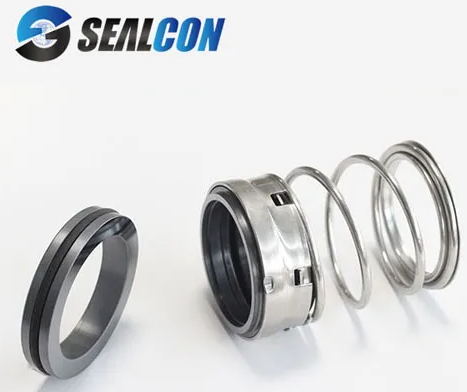
Sealcon's mechanical seal product portfolio is designed to support this approach. Its series of pump seals include rubber bellows seals, O-ring mechanical seals, cartridge seals, PTFE seals, Flygt mechanical seals, OEM replacement seals, and stationary seat housings—providing distributors with a platform for inventory planning of pump seal wholesale across Grundfos, Flygt, KSB, Lowara, and other global pump brands. The entire series operates on the same principle: pump mechanical seals use at least one pair of end faces perpendicular to the rotating shaft, maintained in contact by fluid pressure, compensation mechanisms, and auxiliary sealing elements to prevent leaks during shaft rotation.
I. Why Universal Pump Seals Can Solve Distributors' Excess SKU Problems
The root cause of low inventory efficiency for pump seal distributors is excessive fragmentation. A medium-sized distributor serving a mix of pump brands can easily accumulate 200 to 400 seal SKUs, most of which turn over less than twice a year. The holding costs of this unsellable inventory—storage space, working capital, write-off risks, and picking errors—are eroding the profits of the fast-moving product lines that truly drive the business.
Compatible mechanical seals address this issue by covering multiple pump types with a single seal design. Many pumps from different brands share the same shaft diameters—12 mm, 14 mm, 16 mm, 20 mm, 22 mm, 24 mm, 28 mm, and 30 mm cover the vast majority of needs in residential, commercial, and light industrial pump applications. Seals correctly specified for a particular shaft diameter, end face material combination, and elastomer type can fit and operate normally on multiple pump brands sharing these parameters.
The inventory benefits are direct:
Reduce unsellable SKUs, lower holding costs and write-off losses
Accelerate inventory turnover, improve cash conversion cycle
Simplify warehouse picking, reduce order fulfillment errors
Achieve broader coverage with fewer stocked product lines, enhance customer service response speed
Reliable stocking of common specifications, reduce emergency procurement costs
Sealcon's pump seal page lists multiple seal categories—rubber bellows, metal bellows, PTFE bellows, single cartridge, O-ring, double cartridge, PTFE wedge, Flygt-specific, OEM replacement, and stationary seat housings—providing distributors with building blocks for layered inventory strategies: use a universal core series to cover common applications, supplemented with brand-specific models where precise OEM dimensions are needed.
II. How Compatible Mechanical Seals Are Universal Across Grundfos, KSB, Lowara, and Flygt Pumps
Understanding why cross-brand compatibility is feasible—and its limitations—helps distributors establish reliable stocking solutions while avoiding mismatch risks for customers.
Compatibility logic is based on three factors:
Shared shaft diameters. Pump manufacturers from different brands tend to adopt the same standard shaft diameters for pumps in similar operating conditions. Grundfos CM series pumps, KSB Etanorm, and Lowara e-SV series pumps all require seals of the same aperture for their 22 mm shafts. If the working length, seat outer diameter, and material combinations also match, a single seal design can cover all three pumps.
Standardized end-face and elastomer material options. The most common end-face combinations—carbon graphite/ceramic for clean water, carbon graphite/silicon carbide for medium conditions, silicon carbide/silicon carbide for abrasive or harsh conditions—cover the vast majority of pump application needs, regardless of brand. Elastomer choice follows the same logic (NBR for general water and oil conditions, EPDM for hot water and steam-compatible applications, FKM/Viton for chemical resistance needs): the medium determines the elastomer, not the pump brand.
Brand-specific OEM matching dimensions. In cases requiring precise OEM dimensions—especially for pumps with non-standard working lengths, proprietary seat ring geometries, or special installation structures—Sealcon's OEM replacement seal series provides model-matched alternatives. Sealcon clearly states that its OEM seals are designed for pump mechanical replacement applications, including Grundfos, Alfa Laval, APV, and EMU pumps, with its Flygt seal series manufactured to original dimensions and material requirements.
Practical significance for distributors: Build inventory around shaft diameter and material combinations, then supplement with OEM-matched models for brand-specific needs that the universal series cannot cover. This two-layer strategy can typically reduce total SKUs by 40% to 60% (compared to stocking by brand one-by-one), while maintaining or improving customer satisfaction rates.
III. Key Specification Requirements for Building Wholesale Inventory of Pump Seals
Distributors building a wholesale pump seal program need a specification framework to consistently cross-reference between pump brand/model and seal selection. The following checklist provides core parameters.
Shaft diameter (primary matching factor) Standard metric shaft diameters: 12, 14, 16, 17, 18, 20, 22, 24, 25, 28, 30, 32, 35, 40 mm. Confirm whether the pump uses metric or imperial shaft diameters—this is the most common source of mismatch in cross-brand seal solutions.
Seal type by application scenario
| Seal Type | Best Application Scenarios |
|---|---|
| Rubber bellows (elastomer bellows) | General pumps, circulation, wastewater, easy replacement |
| O-ring mechanical seal | Clean water, HVAC, booster pumps |
| Cartridge seal | Process pumps, easier installation, reduced setup errors |
| PTFE bellows/wedge seal | Chemical resistance, highly corrosive media |
| Flygt insert/cartridge | Submersible sewage and drainage pumps |
| OEM replacement seal | Grundfos, KSB, Lowara, Alfa Laval, EMU brand-specific replacement |
End face and seat ring materials
| Combination | Recommended Conditions |
|---|---|
| Carbon graphite / Ceramic | Clean water, circulation, standard conditions |
| Carbon graphite / Silicon carbide | Moderate wear, higher temperatures |
| Silicon carbide / Silicon carbide | Abrasive media, harsh conditions |
| Tungsten carbide / Tungsten carbide | High wear or highly corrosive media |
Elastomer materials
NBR: General water, oil, and various industrial fluids
EPDM: Hot water, steam-compatible, and some chemical applications
FKM/Viton: Chemical resistance, high-temperature conditions
Springs and metal parts
SS304: General conditions
SS316: Corrosive media, seawater, chemical environments
Distributor operational requirements
Cross-reference labels: Pump brand/model → Shaft diameter → Seal code
Packaging: Individually bagged or boxed, clearly labeled with size and material information
Minimum order quantities and lead times for fast-moving and special-order product lines
Inspection documents: Certificates of conformity and dimensional reports for OEM replacement product lines
IV. Application Scenarios: Meeting the Needs of Grundfos, Flygt, KSB, and Lowara Customers
Grundfos Seal Replacement Needs Grundfos is one of the largest pump brands in the global circulation, booster, and utility pump sectors. Distributors serving building equipment, HVAC contractors, and water treatment facilities will continue to encounter demand for compatible seals for Grundfos CM, CR, TP, and UPS series. Sealcon's OEM replacement seal series covers Grundfos-style replacement dimensions, allowing distributors to meet this demand without stocking OEM parts at OEM prices.
Flygt Submersible Pump Maintenance Flygt submersible pumps are widely used in municipal wastewater, drainage, and industrial effluent treatment sectors. Flygt seal replacement is a periodic maintenance need, with insert and cartridge designs requiring model-matched replacements rather than universal seals. Sealcon's Flygt seal series covers FAL/FAU, FBL/FBU, FEL/FEU, FKL/FKU, FML/FMU, FOL/FOU, and metal and plastic insert types—providing distributors with a complete Flygt coverage series from a single supplier.
KSB Pump Spares and General Industrial Pumps KSB pumps are widely used in industrial processes, water supply, and building equipment sectors. Maintenance contractors and industrial facilities' KSB pump spares needs typically focus on standard shaft diameters and common end-face material combinations. A universal sealing solution covering the most common KSB shaft diameters, equipped with carbon graphite/ceramic and carbon graphite/silicon carbide end-face options, meets the vast majority of this demand.
Lowara and Building Equipment Pumps Lowara pumps are widely used in building boosting, irrigation, and HVAC circulation. Common metric shaft diameters with clean water seal materials (carbon graphite/ceramic, NBR elastomers, SS304 metal parts) cover most Lowara replacement needs. Fast delivery is the primary customer demand in this segment.
Mixed Brand Maintenance Contractors Contractors serving multiple pump brands in a facility or multi-site combination need a distributor who can quickly supply the correct seals without the contractor having to manage cross-reference databases themselves. Distributors with comprehensive universal sealing solutions—clearly labeled by shaft diameter, material combination, and pump brand compatibility—will become the preferred suppliers for this type of customer.
V. Selection Process, Maintenance Logic, and Total Lifecycle Cost: Building a Low-SKU High-Coverage Solution
Distributor Selection Process
Step 1—Analyze historical customer demand. Identify the top 20 pump brands, shaft diameters, and seal types that account for 80% of seal replacement volume. This analysis typically reveals that a few shaft diameters and material combinations drive the vast majority of demand.
Step 2—Build a universal core series. For the most in-demand shaft diameters (typically metric 12 to 35 mm), select rubber bellows and O-ring seal models with carbon graphite/ceramic and carbon graphite/silicon carbide end-face combinations, NBR/EPDM elastomer options. These cover most clean water, circulation, and light wastewater applications across multiple brands.
Step 3—Supplement with brand-specific models for major customers. Flygt insert seals for wastewater customers, Grundfos OEM-style replacements for building equipment customers, and KSB compatible models for industrial process customers. These product line needs are predictable and worth setting up dedicated inventory locations.
Step 4—Establish cross-reference tables. Map pump brand and model → Shaft diameter → Sealcon seal type → Material combination → Inventory code. This table is an operational tool that enables warehouse staff and sales teams to accurately and quickly respond to customer needs without mastering the expertise of each pump type.
Step 5—Set replenishment triggers by turnover rate. High-turnover universal seals should have automatic replenishment points. Slower-turning brand-specific models should be ordered on demand, with delivery lead times confirmed with customers at the time of sale.
Maintenance and Total Lifecycle Cost Efficiency for Distributors and End Users
Reducing unsellable inventory and holding costs stems from rationalizing SKU series. Streamlining seal SKUs from over 300 to 80 to 120 carefully selected product lines can typically reduce inventory holding costs by 30% to 50% while maintaining or improving customer satisfaction rates.
Accelerating emergency response speed comes from reliable stocking of common specifications. The most disruptive failure mode for distributors is running out of stock of commonly used seals when a customer's pump is down. Universal solutions built around high-demand shaft diameters can eliminate most such stock-out events.
Reducing return of incorrect seals stems from clear cross-reference labels and consistent specification documents. Incorrect seal returns are hidden costs, including return shipping fees, re-stocking labor, and customer relationship losses.
Enhancing seal sales profit comes from providing competitive bulk pricing, stable quality, and document-supported supplier relationships. Sealcon's pump seal series supports distributors' economic benefits with competitive pricing, extensive model coverage, and rapid spot delivery.
End-user total lifecycle cost efficiency comes from the advantages of mechanical seals over soft packing: leakage is about 1% of soft packing seals, frictional power consumption is only 10% to 50% of soft packing, maintenance intervals are longer, and shaft or sleeve wear is negligible—all of which reduce the total cost of ownership for distributor customers' pumps and enhance the value proposition of the seal product line.
Conclusion
In 2026, inventory optimization is a quantifiable competitive advantage for pump seal distributors. By building a smart series of pump seals around common shaft diameters, compatible material combinations, and brand-specific OEM replacement models, distributors can serve Grundfos, Flygt, KSB, Lowara, and other global pump platforms with fewer SKUs, faster turnover, and lower emergency procurement costs. Sealcon's extensive mechanical seal product line—covering rubber bellows, O-rings, cartridges, PTFE, Flygt-specific, and OEM replacement seals—provides the product platform to execute this strategy from a single supplier relationship.
Visit the Sealcon pump mechanical seal product page to request compatible seal selection and quotes.
Please submit the following information to receive accurate recommendations:
Operating conditions: Clean water, wastewater, oil, chemicals, hot water, abrasive media, operating temperature, pressure, speed
Quantity: Sample order, maintenance stock quantity, or annual distributor demand
Size/specification: Pump brand and model, shaft diameter, seal type, end face and seat ring materials, elastomer materials, existing seal code
Target metrics: SKU reduction goals, faster inventory turnover, extended seal life, reduced leakage rate, fewer emergency orders
Current issues: Too many unsellable SKUs, incorrect seal matches, repeated customer downtime, high inventory holding costs, difficult cross-reference management
Frequently Asked Questions
1. What are pump seals?
Mechanical seal components installed around a rotating pump shaft prevent fluid leakage while allowing the shaft to rotate. They use at least one pair of end faces perpendicular to the shaft, maintained in contact by fluid pressure, compensation mechanisms, and auxiliary sealing elements.
2. Universal mechanical seals vs. OEM seals: Which is more suitable for distributors?
Both have their uses. Universal seals cover common shaft diameters and application scenarios across multiple brands, reducing SKU count and improving turnover rates. OEM-style seals are more suitable when pumps require precise dimensions or brand-specific installation geometries. Most distributors stock both types: universal core series for high-volume common applications, OEM-matched models for brand-specific needs like Grundfos seal replacements or Flygt insert seals.
3. What is the ROI of a wholesale pump seal inventory optimization solution?
ROI comes from reducing unsellable inventory and holding costs, accelerating inventory turnover, reducing premium emergency procurement, lowering incorrect seal return rates, and enhancing satisfaction rates that support customer retention and repeat purchases.
4. Do compatible mechanical seals require pump modification?
No, as long as they are correctly matched by shaft diameter, working length, seat dimensions, and material combinations. For brand-specific pumps, buyers should confirm the pump model and existing seal code before ordering to ensure dimensional compatibility without modification.
5. What parameters are needed for correct selection and quotation?
Pump brand and model, shaft diameter, existing seal code, process medium, operating temperature and pressure, shaft speed (RPM), end face and seat ring material preferences, elastomer type, order quantity, and requirement for universal inventory, OEM replacement, or brand-specific spare parts—such as Grundfos seal replacements or KSB pump spares.
-
China Water Pump Spare Parts: Complete Guide to Water Pump Components and Parts List
-
Different Types of Pump Seals: A Complete Guide to Pump Mechanical Seal Types
-
Mechanical Seal Stationary Seat: Complete Guide to Stationary Parts Sealing and Seal Seat Selection
-
Flygt Pump Mechanical Seal Installation Guide: Choosing Compatible Replacement Seals for Flygt Pumps
-
Sealing Sense
-
Classification Of Rubber Seal Ring